1,000
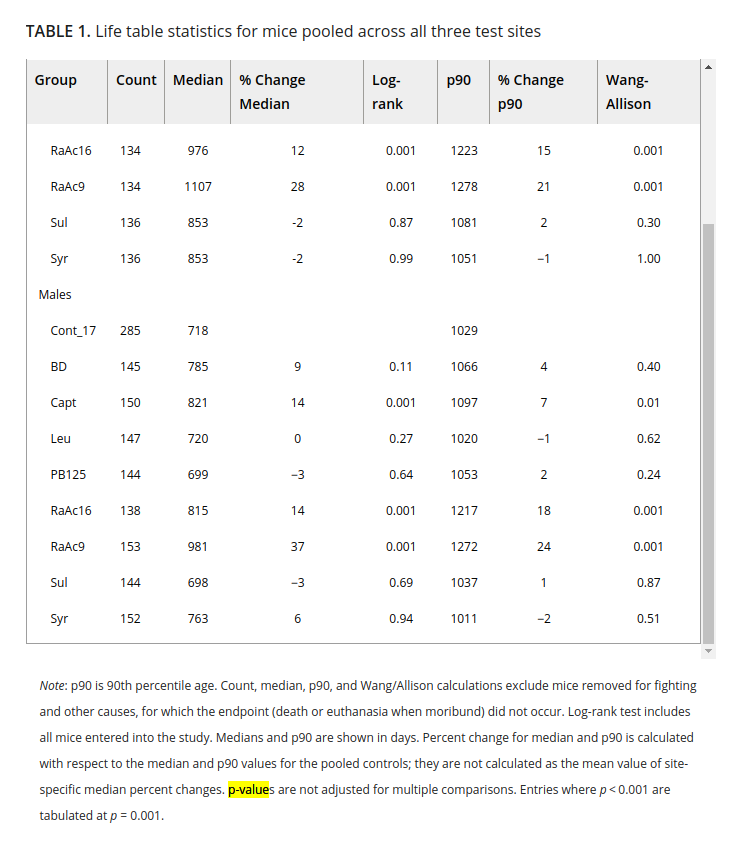
Published answer for this one too: Strong et al. 2022, Aging Cell (doi 10.1111/acel.13724), the C2017 cohort paper. (R/S)-1,3-butanediol at 100,000 ppm from 6 months gave a 2% increase in female median lifespan (p = 0.04) only when the site with unusually short-lived controls was included; the two-site analysis showed 0%, there was no effect in males, and no change at the 90th percentile. The abstract's own wording is that BD "seemed to produce a small (2%) increase in females, but only if the analysis included data from the site with unusually short-lived controls", which reads as NO under a strict significance standard, unlike captopril in the same cohort (females +6%, p = 0.002; males +14%, p = 0.001, pooled). Every ITP row by compound, dose, sex and significance, with the dog-equivalent dose next to it (mine): https://w0lph.github.io/k9/why-dogs.html?v=2